Quick answer: A floor hardener is a dry powder that is spread over fresh concrete and troweled into it, making the top layer of the floor much harder, dust-free and resistant to wear. DPF supplies Dutop 100, a non-metallic dry-shake floor hardener for factories, warehouses, garages and other industrial and commercial floors in Bangladesh.
What Is Dutop 100 Floor Hardener?
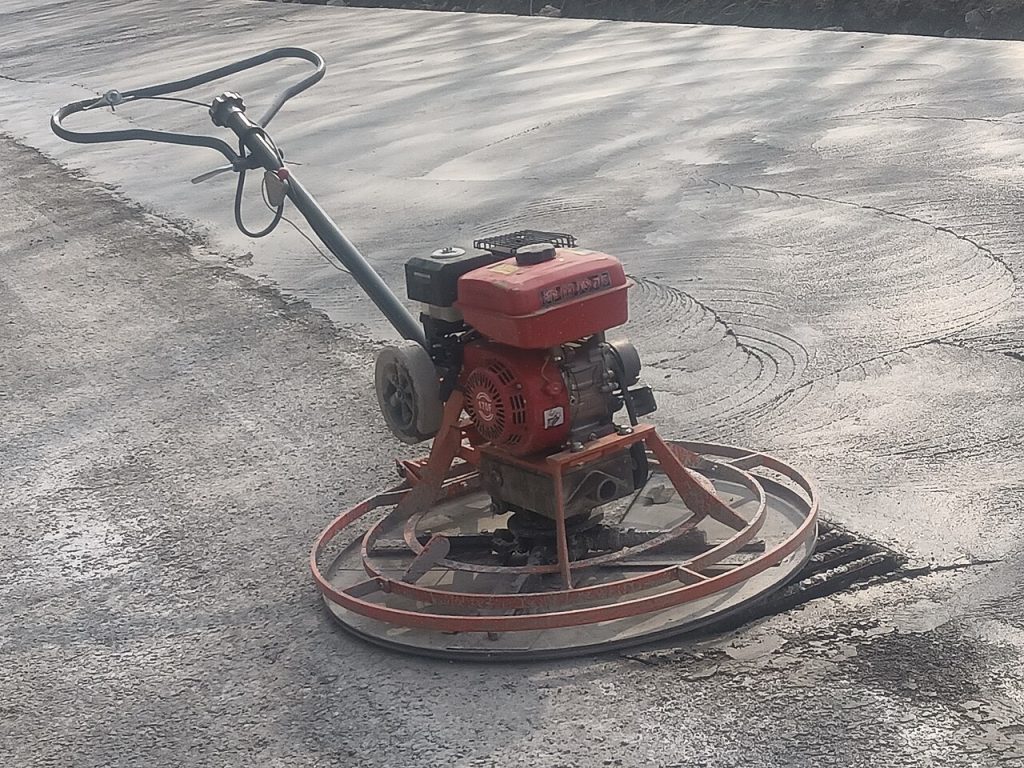
Dutop 100 is a cement-based, non-metallic, premixed dry-shake floor hardener made with natural aggregate. It is supplied in 25 kg bags, ready to use. During construction it is broadcast onto the surface of freshly placed concrete and finished with a power trowel. The hardener bonds with the concrete and forms a dense, hard-wearing top layer that protects the slab for many years.
Benefits of Dutop 100
- High abrasion resistance – stands up to trolleys, forklifts and constant foot traffic.
- High impact resistance – the surface resists damage from dropped tools and materials.
- Dust-proof – stops the concrete dusting that damages products and machinery.
- Slip resistant – the troweled finish keeps a fine, safe texture.
- Low maintenance – easy to sweep and wash, with no coating to re-apply.
- Easy application – premixed and applied with standard concreting equipment.
Where to Use a Floor Hardener
- Factory production floors and garment, textile and spinning mills
- Warehouses, distribution centres and loading docks
- Car parks, garages and workshops
- Commercial and institutional buildings with heavy foot traffic
For areas that need a sealed, hygienic surface – such as food, beverage and pharmaceutical plants – a resin floor like Ducrete MF PU concrete or Dupoxy SL self-leveling epoxy is the better choice.
How Dutop 100 Is Applied
- Place and level the concrete as normal.
- First broadcast: when the concrete can take a footprint of a few millimetres, spread about two-thirds of the hardener evenly.
- Float: once the powder darkens with moisture from the slab, work it in with a power float.
- Second broadcast: spread the remaining hardener at right angles to the first pass and float again.
- Power trowel to a dense, smooth or lightly textured finish.
- Cure the slab with a curing compound or wet curing to prevent cracking and dusting.
The dosage depends on the expected traffic. We recommend the right rate for your floor after a site visit.
Floor Hardener vs Epoxy vs PU Flooring
| Feature | Dutop 100 hardener | Epoxy flooring | PU concrete |
|---|---|---|---|
| When applied | On fresh concrete only | New or existing floors | New or existing floors |
| Surface | Hard concrete, slightly porous | Seamless, sealed, glossy | Seamless, sealed, textured |
| Best for | Warehouses, factories, car parks | Dry production, pharma, offices | Food, wet and hot-wash areas |
| Cost | Lowest | Medium | Medium to high |
See epoxy flooring price in Bangladesh and PU flooring price in Bangladesh for resin floor costs.
Frequently Asked Questions
What is Dutop 100?
Dutop 100 is a cement-based, non-metallic, premixed dry-shake floor hardener made with natural aggregate. It is broadcast onto fresh concrete and power-troweled into the surface to give a harder, dust-free and abrasion-resistant top layer.
Can a floor hardener be applied on an old concrete floor?
No. A dry-shake hardener must be worked into fresh concrete on the day it is poured. For an existing floor that is dusty or worn, a coating such as epoxy flooring or PU flooring is the right solution.
Is a floor hardener better than epoxy flooring?
They do different jobs. A hardener makes the concrete itself stronger and dust-free at a low cost, but the surface stays porous. Epoxy and PU give a seamless, sealed, easy-to-clean surface and can be applied later. Many factories use a hardened concrete slab first and add epoxy or PU in hygiene-critical areas.
Is Dutop 100 slip resistant?
Yes. The power-troweled hardened surface keeps a fine texture that is slip resistant in normal dry use. For wet or oily areas, see our anti-slip flooring systems.
How much does Dutop 100 cost?
The price depends on the floor area and the dosage needed for your traffic. Prices change with raw-material and shipping costs, so call 01711-037659 for a current quotation.
Get Dutop 100 for Your Project
We supply Dutop 100 across Bangladesh, including Dhaka, Gazipur, Narayanganj and Chattogram. Call 01711-037659 or email info@duconasia.com for a quotation and technical advice.