Garments and textile factories in Bangladesh run long shifts, move heavy trolleys and generate fibre dust every day. A plain concrete floor quickly starts dusting, cracking and absorbing oil, which affects product quality, worker safety and buyer audits. A properly specified epoxy floor solves these problems with a seamless, dust-free and easy-to-clean surface.
Why Garments Factories Need a Better Floor
- Dust control: untreated concrete releases fine dust that settles on fabric and finished garments.
- Buyer compliance: clean, well-marked floors support compliance and safety audits.
- Trolley and forklift traffic: continuous movement wears down weak concrete surfaces.
- Oil and chemical spills: sewing machine oil and cleaning chemicals stain porous floors.
- Safety marking: walkways, machine zones and fire exits need clear, durable line marking.
Recommended Flooring Systems by Area
Sewing and Cutting Floors
A self-leveling epoxy system such as Dupoxy SL gives a smooth, seamless and dust-free surface that is easy to sweep and mop. It also brightens the production floor by reflecting light.
Finishing, Packing and Warehouse Areas
Areas with trolley and forklift traffic need a heavy-duty epoxy or PU system with good abrasion and impact resistance. See our epoxy flooring systems for options.
Washing and Dyeing Sections
Wet areas with hot water and chemicals are better served by PU concrete such as Ducrete MF, which handles moisture and thermal shock better than standard epoxy. Learn more about PU flooring.
Electronics and Control Rooms
Areas with sensitive equipment can use ESD (anti-static) flooring.
Benefits of Epoxy Flooring in RMG Factories
- Seamless, dust-free surface that keeps fabric clean
- Resistance to abrasion, oil and common cleaning chemicals
- Easy daily cleaning and lower maintenance
- Durable colour-coded walkways and safety markings
- Brighter working environment
Installation With Minimal Production Downtime
Most factories cannot stop production for long. Our team can plan the work in phases, section by section or during weekends and holidays, so that only part of the floor is out of service at any time. The process includes site inspection, surface preparation, crack repair, primer, body coat and line marking.
Common Mistakes to Avoid
- Skipping proper surface preparation (grinding or shot blasting)
- Applying epoxy over a damp slab without checking moisture
- Choosing the thinnest coating only to reduce the initial price
- Using the same system in dry sewing areas and wet washing areas
Read more in our guide to epoxy floor problems and solutions.
How Much Does It Cost?
The cost depends on the system, thickness, slab condition and total area. See our epoxy flooring price guide for Bangladesh for current per square foot ranges.
A Real Example: Garment Washing Plant
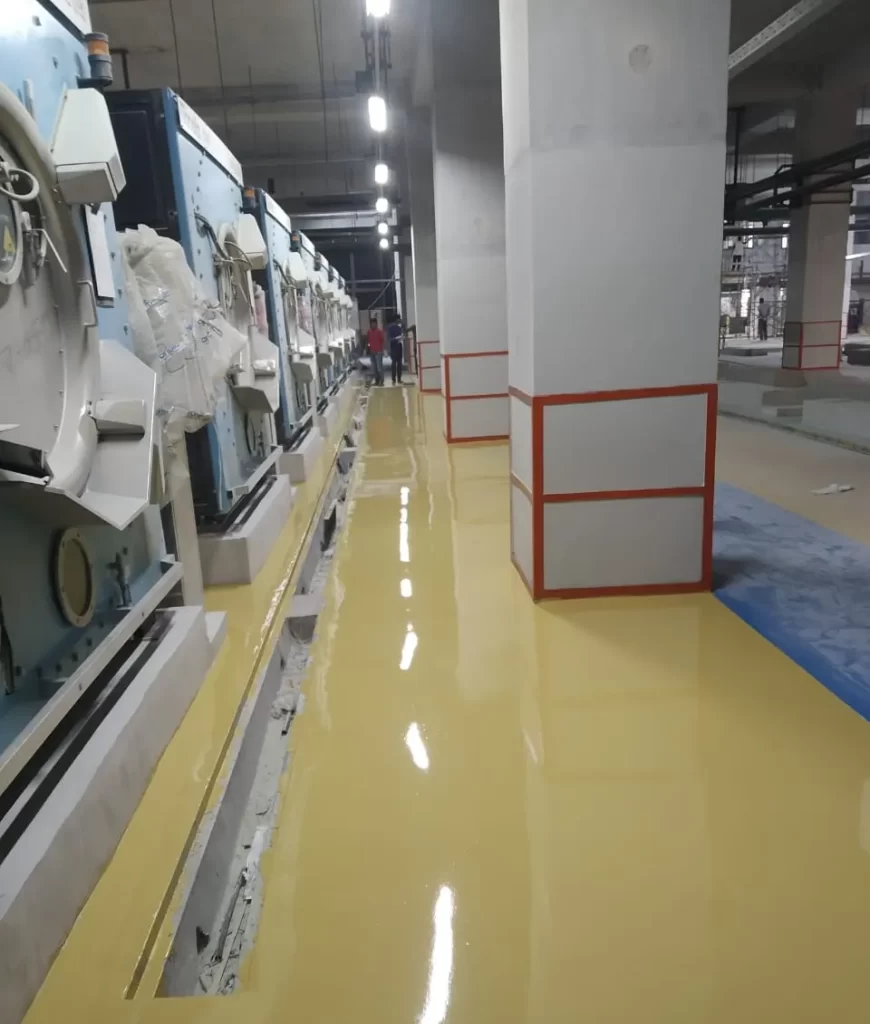
This garment washing plant in Bangladesh was finished with Dupoxy SL self-leveling epoxy in a bright safety colour. See more on our projects page.
Frequently Asked Questions
Is epoxy or PU better for a garments factory?
Epoxy (such as Dupoxy SL) suits dry areas like cutting, sewing, finishing and packing. For washing and dyeing sections with hot water and chemicals, PU concrete (Ducrete MF) lasts longer.
Can epoxy flooring be done without stopping production?
Yes. Work can be phased floor by floor or line by line, or scheduled for weekends and Eid holidays, so most of the factory keeps running.
How long does an epoxy floor last in an RMG factory?
With correct surface preparation and the right thickness, a factory epoxy floor typically gives many years of service. Thin paint-type coatings wear out much faster under trolley traffic.
Does epoxy flooring help with buyer audits?
A clean, dust-free floor with clear walkway, machine-zone and fire-exit marking supports safety and housekeeping requirements that buyers and auditors check.
Get a Free Site Inspection
DPF supplies and installs industrial flooring for garments, textile and spinning mills across Bangladesh. Contact us for a site visit and a quotation, or see our textile and spinning mill flooring page.